
We eat every day, but getting all the nutrition our bodies need isn’t always as simple. Here’s what really makes a meal complete.
Yes. For the inside article page, I’d keep the writing educational and editorial like your reference, rather than making it sound like an Anthro sales page.
What does a complete meal actually mean?
Intro paragraph
We hear the words balanced meal and complete nutrition all the time—but what do they actually mean? A complete meal isn’t simply about eating enough or counting calories. It’s about bringing together carbohydrates, protein, fats, fibre, vitamins and minerals in a balance that supports the body’s everyday nutritional needs. Here, we break down what makes a meal complete and why each part matters.
More than just calories
Calories tell us how much energy food provides, but they don’t tell us the whole nutritional story. Two meals can contain a similar number of calories while providing very different amounts of protein, fibre, essential fats, vitamins and minerals.
That’s why looking at what those calories are made of matters just as much as looking at the number itself.
Start with the macros
Macronutrients are nutrients the body needs in relatively large amounts: carbohydrates, protein and fats.
Carbohydrates are an important source of energy. Protein provides amino acids needed for the maintenance and repair of body tissues. Dietary fats provide energy, supply essential fatty acids and help the body absorb fat-soluble vitamins. Fibre, while technically a type of carbohydrate, also plays an important role in digestive health.
A complete meal considers all of these together rather than focusing heavily on just one.
Then come the micronutrients
They may be required in much smaller quantities, but vitamins and minerals are essential to normal body function.
From iron and calcium to vitamin B12, vitamin D and zinc, different micronutrients contribute to processes throughout the body. This is why eating enough protein or hitting a calorie target alone doesn’t necessarily make a meal nutritionally complete.
So, what makes a meal complete?
Think of it as a combination of energy + macronutrients + micronutrients.
A thoughtfully composed meal provides carbohydrates, protein, fats and fibre alongside essential vitamins and minerals—in appropriate quantities and proportions. And importantly, nutritional needs can vary depending on factors such as age, sex, activity level and overall diet.
Where Anthro comes in
Modern schedules don’t always make preparing a balanced meal practical. Anthro was designed around a simple idea: make complete nutrition easier to access when you need a convenient meal.
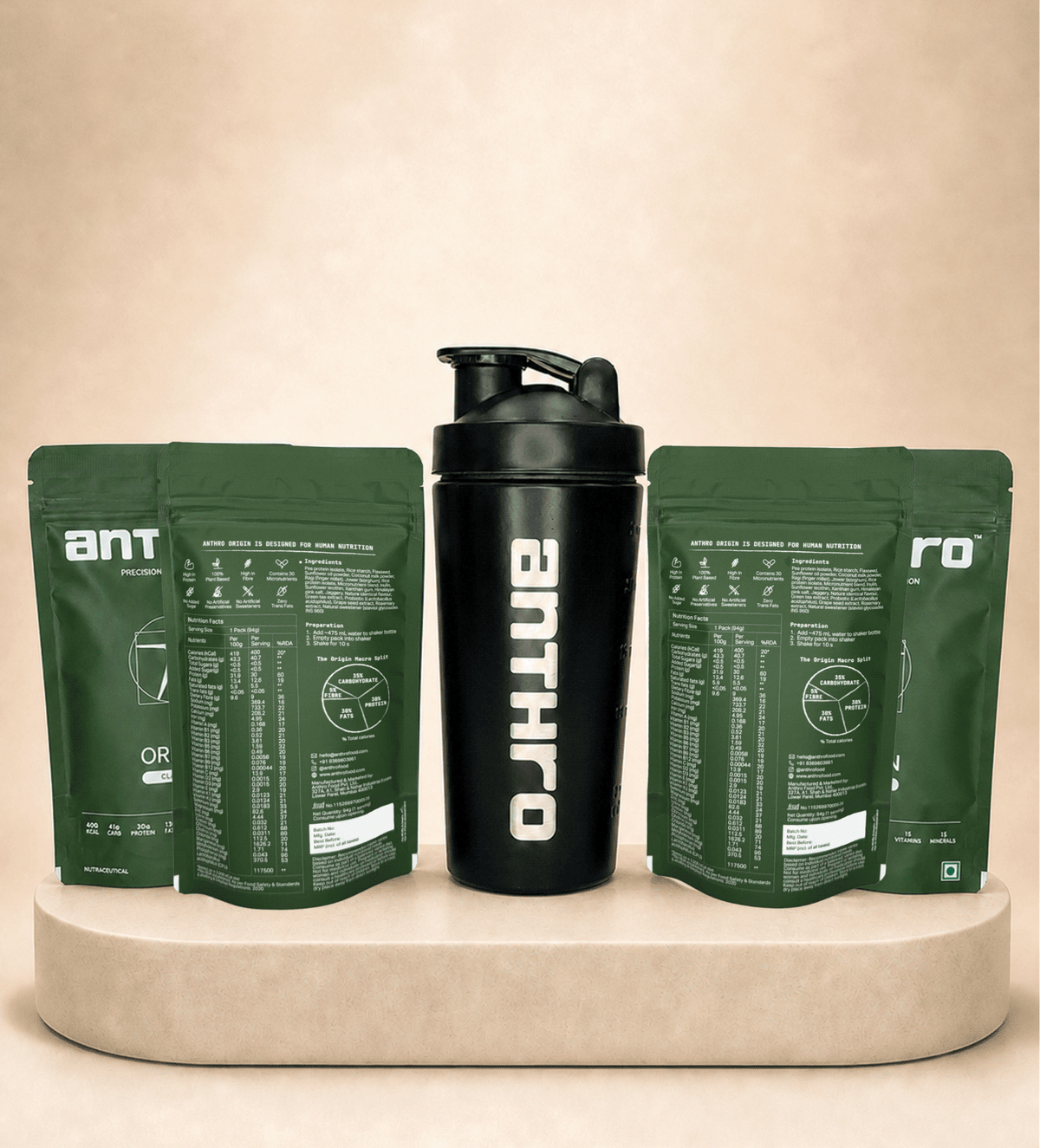
Each serving brings together carbohydrates, protein, fats and fibre along with 28 essential vitamins and minerals in one measured meal. Add water, shake, and it’s ready.
Because eating well shouldn’t have to become another complicated part of your day.
As good as it gets
Pick your perfect blend

Read more

Oil in detail 1. How does oil penetrate the skin? What are the differences between an oil and a cream? While drinking water is the key to hydration (almost 60% of our body is made up of water), the...
the anthro cold coffee frappe Coffee gets you through the morning. Breakfast gets forgotten somewhere along the way. This recipe brings the two together—a cold, creamy coffee frappe made with Anthr...

